
Automatic Enrolment – Workplace Pension duties

Under the Pensions Act 2008, every employer in the UK must put certain staff into a workplace pension scheme and contribute towards it. This is called ‘Automatic Enrolment’. If you employ at least one person, you are an employer and you have certain legal duties.
It is important that you understand what to do, and by when, so you can meet your automatic enrolment duties on time.
Your legal duties begin on the day your first member of staff starts work. This is known as your duties start date. Even if you think you won’t need to put your staff into a scheme, you will still have duties.
If you employ at least one person aged between 22 up to state pension age and who earns more than £192 per week (£833 per month or £10,000 per year), then you will need to provide a pension scheme.
Step 1: Choose a pension scheme
You should do this as soon as you are registered for PAYE with HMRC, as it can take some time to complete.
You will need to choose a pension scheme that is set up for automatic enrolment. You and your staff will pay money into this scheme to help your staff save for their retirement. You can find a scheme yourself or get help from a financial adviser.
Step 2: Work out who you need to put into a pension scheme
You must do this on your duties start date.
On your duties start date, you must work out how much each member of staff earns and how old they are. This will identify what you need to do and is known as ‘assessing your staff’. You should use this information in order to complete your Declaration of Compliance – see Step 4.
Assessing your staff:
Staff will fall into one of two categories:
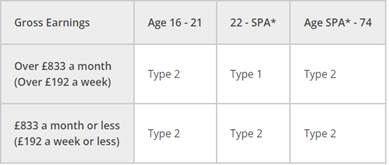
Type 1 – Staff who must be put into a pension scheme. You must pay into it.
Type 2 – Staff who do not need to be put into a pension scheme.
Other things to consider
Employing staff on variable hours, contracts and pay
If you employ seasonal or temporary staff, or you have staff whose hours and pay varies each time you pay them, you will still need to assess them to work out if they need to be put into a pension scheme.
Postponement
You can delay ‘assessing’ your staff for up to three months. This is known as ‘postponement’. Postponement does not change your duties start date, but simply the day you assess your staff’s age and earnings. If you use postponement, you must write to your staff to tell them what you are doing.
Put staff into a pension
Having worked out what you need to do for each person you employ, it is now time to put those that you need to into a pension scheme. You will need to give your pension scheme provider all the information that they need to initially set up your staff in the pension scheme.
You will then need to make contributions. Once you have decided how much you and your employees will contribute (please see separate guidance) then you will need to process this, and upload the data to your provider, through payroll .
Pay contributions into your pension scheme
This is usually done by direct debit, which you will need to set up with the pension provider.
Step 3. Write to your staff
Within 6 weeks after your duties start date, it is your legal duty to write to all your staff individually to explain how automatic enrolment applies to them.
Your pension provider may be willing to do this on your behalf, but you can also use the templates on The Pensions Regulator website:
Letters can also be generated in Brightpay by the payroll team on request.
Step 4. Declare your compliance
You must do this within 5 months after your duties start date.
Even if someone else has helped you with your duties and may even be completing the declaration for you, it is your legal duty to make sure that the declaration is completed on time and the information entered is correct. If not, you may be fined.
You can only start your declaration of compliance when you receive your letter from The Pensions Regulator, as you’ll need your letter code and PAYE reference. Although you have five months to complete your declaration, we recommend that you start as soon as possible after you’ve carried out your automatic enrolment duties.
The Pensions Regulator (TPR) can impose fines of the declaration of compliance is not completed and submitted on time.
YOUR ONGOING DUTIES
1. Monitor the ages and earnings of your staff
You must monitor the ages of your staff and the amount you pay them (including new starters) to see if you need to put any of them into a pension scheme. You must put them into a pension scheme and write to them within six weeks from the day they meet the age and earnings criteria.
If you have any staff who are:
- aged between 22 up to state pension age and
- earn over £10,000 per year, or £833 per month or, £192 per week
you must put them into your pension scheme, and you must both pay into it.
2. Maintain contributions
Once you have set up a pension scheme and put your eligible staff into it, your legal duties don’t end there. You must continue to make the payments that are due into the scheme every time you run payroll. The Pensions Regulator monitors the contributions that are paid into workplace pensions and can tell if payments that are due are not being made into your staff’s automatic enrolment scheme. They will take action if you fail to comply with your ongoing legal duties, and you may need to backdate any missed payments.
3. Manage requests to join or leave your scheme
If any of your staff write to you asking to join your scheme, you must put them into it within a month of receiving their request.
You will have to pay into the pension scheme if they are:
- aged 16-74
- and earn at least £520 a month or £120 per week.
Any of your staff can choose to leave your pension scheme after being put into one. If they do ask to leave within one month of being put into a scheme, this is known as opting out. Many pension providers will manage the opt out process on your behalf – speak to your provider if you are unsure. If any of your staff opt out, you need to stop taking money out of their pay and arrange a full refund of what has been paid to date. This must happen within one month of their request.
4. Keep records
You must keep records of how you’ve met your legal duties, including:
- the names and addresses of those you’ve put into a pension scheme
- records that show when money was paid into the pension scheme
- any requests to join or leave your pension scheme
- your pension scheme reference or registry number
You must keep these records for six years, except for requests to leave the pension scheme which must be kept for four years.
5. Re-enrolment and re-declaration
Every three years you must put certain members of staff back into an automatic enrolment pension scheme and tell The Pensions Regulator that you have done it. This is called re-enrolment and re-declaration.
Re-enrolment
Step 1 – Check that you have staff to put back into your pension scheme
Assess your staff
You should do this on the third anniversary of your duties start date or staging date. This is known as your re-enrolment date.
You only need to assess existing staff who have left your pension scheme or have reduced their contributions.
Any staff who are:
- aged between 22 and state pension age
- and earn over £10,000 a year, or £833 a month, or £192 a week
must be put into your pension scheme and you must both pay into it.
More information on this can be found in www.tpr.gov.uk/detailedguidance
If you have worked out you don’t have any staff to put back into your pension scheme, you still need to complete your re-declaration of compliance.
Please note: postponement cannot be used for re-enrolment.
Put staff back into your pension scheme
You should do this within six weeks of the third anniversary of your duties start date or staging date. Having worked out who you need to put into a pension scheme that is suitable for automatic enrolment, you must then do so and start paying into it. If any of your staff choose to leave your pension scheme (opt out) within one month of being put back in, you need to stop taking money out of their pay and arrange a full refund of what has been paid to date. This must happen within one month of their request.
We recommend that you use the third anniversary of your automatic enrolment duties start date or staging date as your re-enrolment date. However, you can choose an alternative date if, for example, you have already passed the third anniversary of your duties start date or staging date.
You can do this up to three months after the third anniversary of your duties start date or staging date.
If you choose an alternative re-enrolment date, you should put staff back into your pension scheme within six weeks of this date. You don’t need to tell The Pensions Regulator your chosen date until you complete your re-declaration of compliance.
Important: your re-declaration deadline doesn’t change if you choose a different day to the third anniversary of your duties start date or staging date, on which to assess your staff This means you must complete your re-declaration of compliance within five months of the third anniversary of your duties start date or staging date, regardless of which day you choose
Step 2 – Write to staff you have put back into your pension scheme
You must do this within six weeks of the third anniversary of your duties start date or staging date or the alternative date you have chosen to assess your staff.
It is your legal duty to write to each member of staff you have put back into your pension scheme. Your pension provider may do this for you, or you can use The Pensions Regulator example letter template.
You do not have to write to staff that are not being put back into your pension scheme.
Finerva payroll team will do the re-enrolment on your behalf as part of the payroll process, and they will inform you of the date of re-enrolment and the number of employees that were re-enrolled. You will need this information to do the re-declaration below.
Re-declaration
Complete and submit your re-declaration of compliance.
You must do this within five months of the third anniversary of your duties start date or staging date.
Completing and submitting your re-declaration of compliance is a legal duty to show how you have fulfilled your employer duties for re-enrolment.
You must complete your re-declaration even if you don’t have any staff to put back into your pension scheme.
You can start your re-declaration at any time after you have re-enrolled staff, or as soon as you work out you have no staff to put into your pension scheme.
You can complete your re-declaration here:
There is also a useful checklist on the link above to help you gather the information you will need beforehand.
Re-declaration deadline date
Your re-declaration deadline will be confirmed to you on communications you receive from The Pensions Regulator regarding re-enrolment and re-declaration.
We recommend that you don’t leave your re-declaration until the last day to complete as some information may take time to prepare.
If someone completes it for you, it is still your legal duty to make sure that it is completed correctly and it is submitted on time. Failure to complete your re-declaration could result in you being fined.
Finerva can support your company with the re-declaration for a fee of £175 + VAT
The information available on this page is of a general nature and is not intended to provide specific advice to any individuals or entities. We work hard to ensure this information is accurate at the time of publishing, although there is no guarantee that such information is accurate at the time you read this. We recommend individuals and companies seek professional advice on their circumstances and matters.
-

Guidance on Staff Entertainment and Subsistence
10 July 2025
Rules on staff food, entertainment, and travel expenses
Bookkeeping, Payroll and VAT
-

Tax implications on staff parties and benefits
2 December 2024
Details around staff parties and benefits
Bookkeeping, Payroll and VAT
-

Guide to approving payroll
27 March 2023
What to look for when checking entry requests and approving payroll
Payroll